- Home
- Carbon monoxide safety
Where the gas goes: seven checkpoints on every furnace.
A gas furnace burns fuel a few inches from the air you breathe. Here is the path that combustion takes — and the seven places we check that it stays on the right side of the wall.
Gas in, flue gases out, clean air to your rooms.
Gas supply and valve
Gas pressure set to the furnace's rating, and every connection leak-tested.
Burners and flame
A clean, steady, mostly blue flame — and a combustion analyzer to confirm what's in the flue, not a guess.
Heat exchanger
The wall between burning gas and your air. A crack lets flue gases mix in, so it's inspected at every tune-up.
Inducer and draft
The fan or draft hood that pulls flue gases up and out. A pressure switch proves it's working before the burners light.
Vent
Intact, sloped the right way, clear of nests, snow and debris, and ending outdoors where it should.
Combustion air
A furnace needs air to burn cleanly. A closet sealed too tight or a blocked intake starves it.
Carbon monoxide alarm
The last line of defence, near sleeping areas. Colorado requires CO alarms in many homes with fuel-burning appliances or attached garages.
General guidance, not an inspection. If you smell gas, leave the building and call your gas utility or 911 from outside.
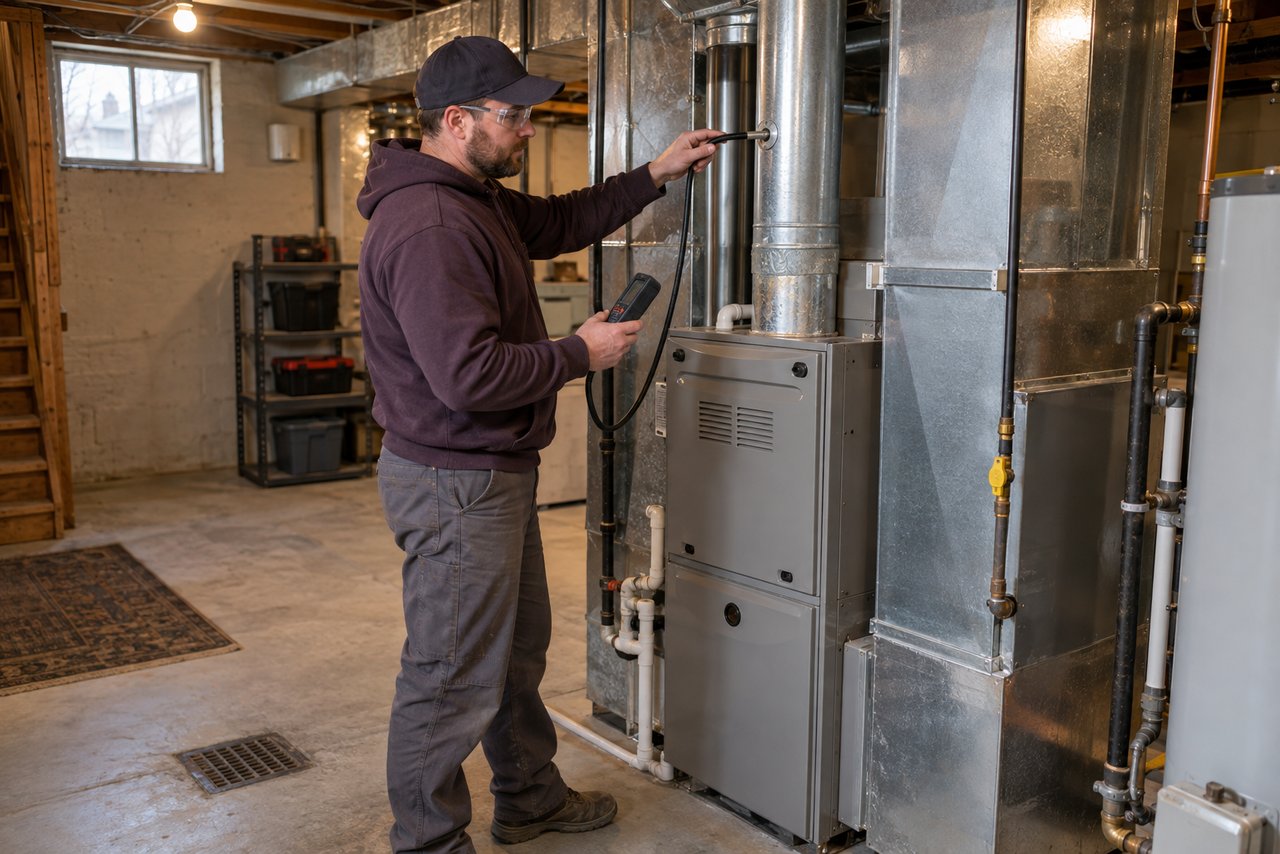
Measured, not eyeballed.
A flame can look fine and still be making too much carbon monoxide. So every heating tune-up includes a combustion analysis in the flue, a look at the heat exchanger, and a check of the vent from the furnace to where it leaves the building.
You get the readings, not just "looks good".
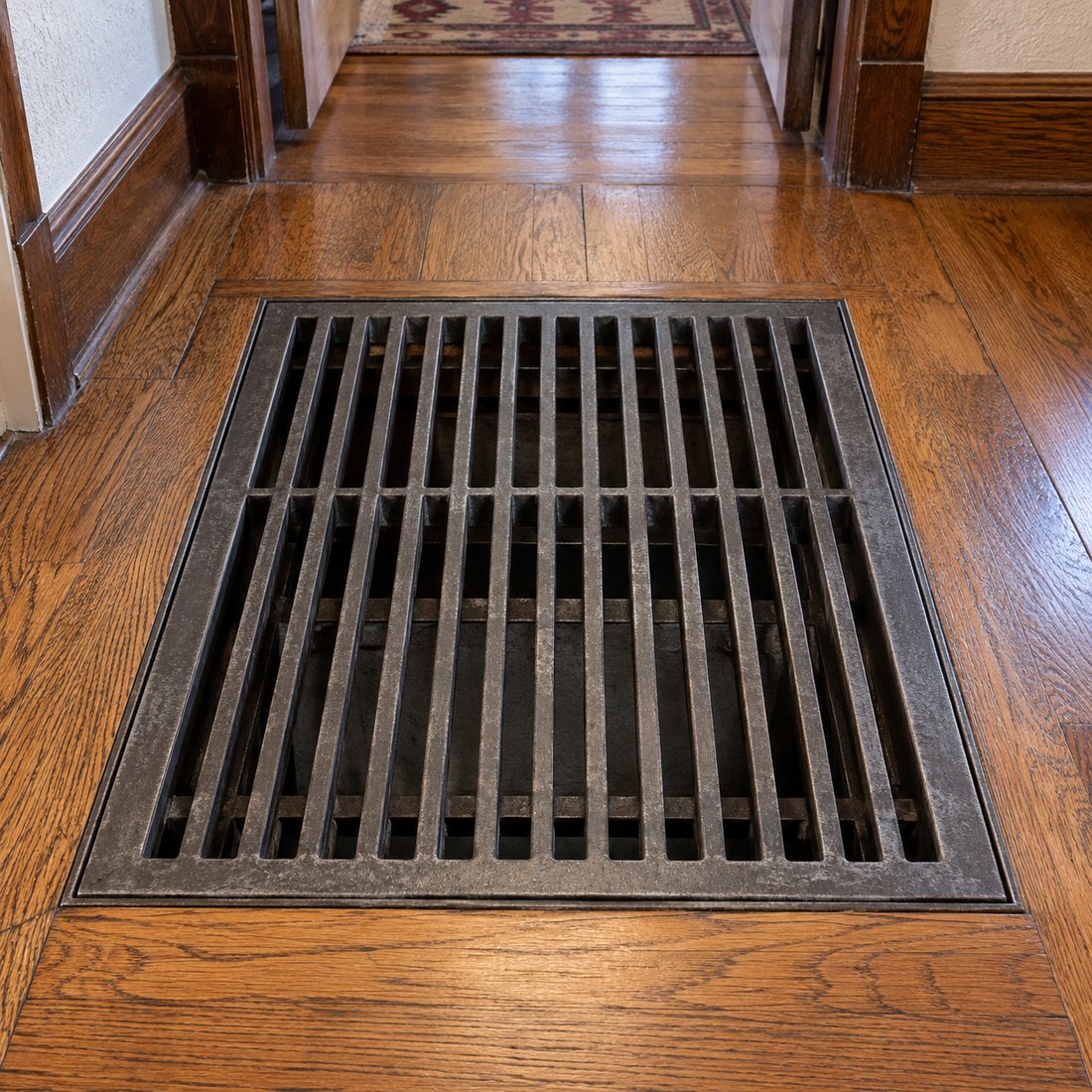
Floor furnaces and wall heaters need the same care.
Many older bungalows here still heat with a floor furnace under a grate or a wall heater in the hallway. They have the same seven checkpoints — often with older venting that deserves a closer look.

Rooftop units and unit heaters burn gas too.
A gas-fired rooftop unit, a shop heater or a church furnace has the same combustion path. In buildings full of people, the checks matter more, not less.
Test the alarm when you change the clocks.
Press the test button on your CO alarms each spring and fall, and replace alarms at the age the maker specifies — it's printed on the back.
Book a heating check.
All seven checkpoints, with the readings — for a house or a building.